Red-Brick Arch Construction at Longteng Bridge: Piers and Arch Rings
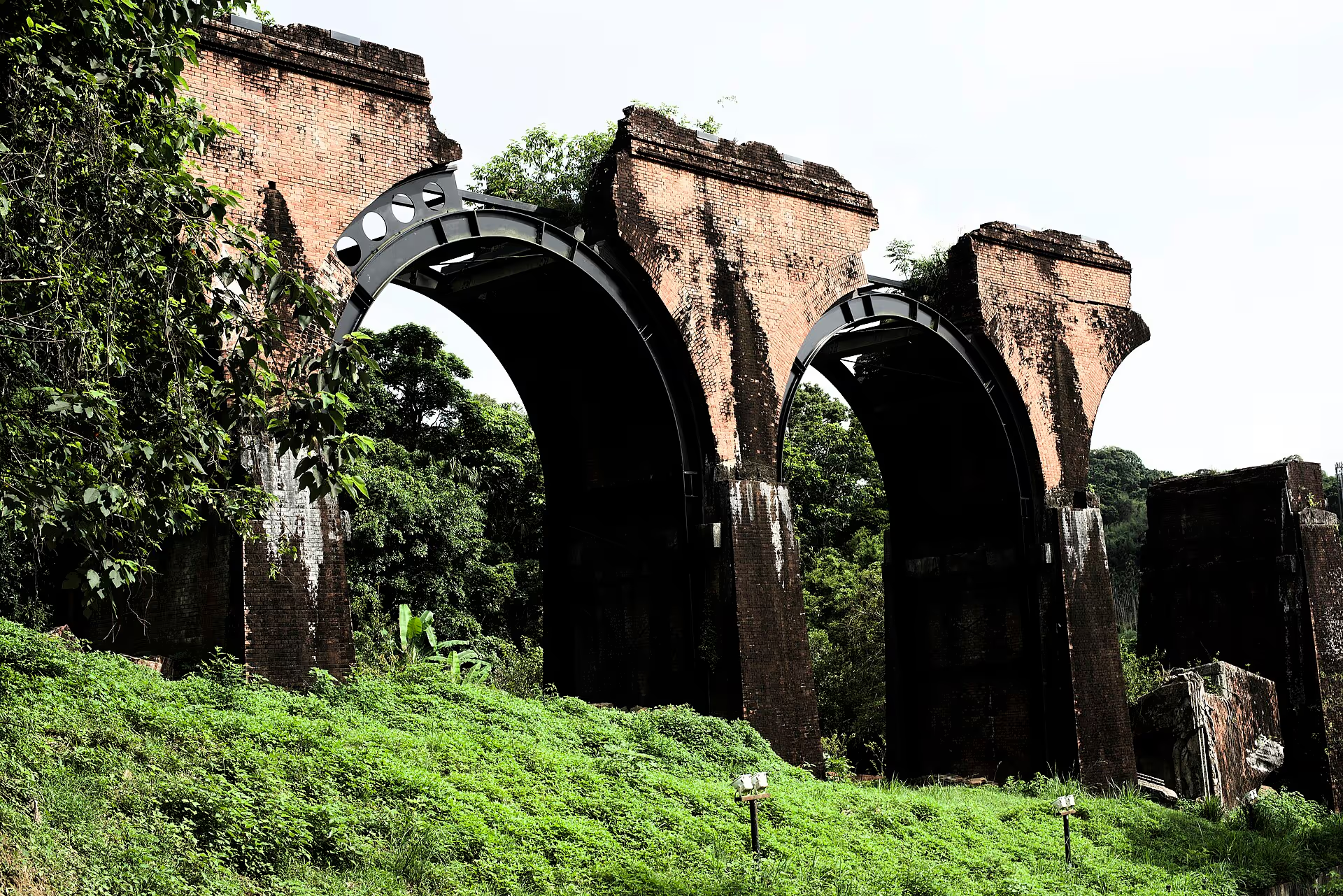
The red-brick arch rings are Longteng Bridge's most recognizable engineering feature and a starting point for understanding historic bridge loads.
Location
Sanyi Township, Miaoli County
Topic
Bridge construction
Navigation
Confirm your destination
Before visiting
Check current notices
Understand the arches
The curved structure channels weight toward the piers and foundations; the surviving remains still show this design after earthquake damage.
Observe safely
Use a zoom lens or phone camera from an authorized path rather than climbing onto a pier to inspect the bricks.
Protect the monument
Stay on open routes and follow site signs, markings and management instructions.
How should you explore the brick-arch structure?
The red-brick arch rings are the clearest visible feature of Longteng Bridge’s construction and a useful introduction to how historic bridges carried loads.
Before you arrive
An arch transfers loads along its curve toward the supporting piers and foundations. Even after the bridge was damaged by an earthquake, the surviving masonry shows the underlying structural form.
What to observe on site
Remain on authorized walkways. Use a telephoto lens or your phone’s zoom to study brickwork; do not climb the piers for a closer look.
Frequently asked questions
Why do the bricks differ in color? Lighting, weathering and restoration may change their appearance. Color alone cannot establish a brick’s age.
Is a ticket required? Outdoor viewing of the historic bridge and the paid Old Mountain Line Rail Bike are separate activities. Check the operator’s rules if you plan to ride.
Where should I navigate? Use Longteng Bridge on Google Maps to visit the ruins. Rail bike passengers should follow the station shown on their booking.
Related guides and official information
- Getting to Longteng Bridge
- Parking and Longteng Station
- Comparing Old Mountain Line rail bike routes
- Nearby attractions and Shengxing Station
- Rail bike operator announcements
How a masonry arch works
The curved brickwork redirects weight above the span toward supports on both sides. The piers and foundations must then carry those forces together. The surviving arch rings provide a visible record of early bridge engineering.
Three structural details worth noticing
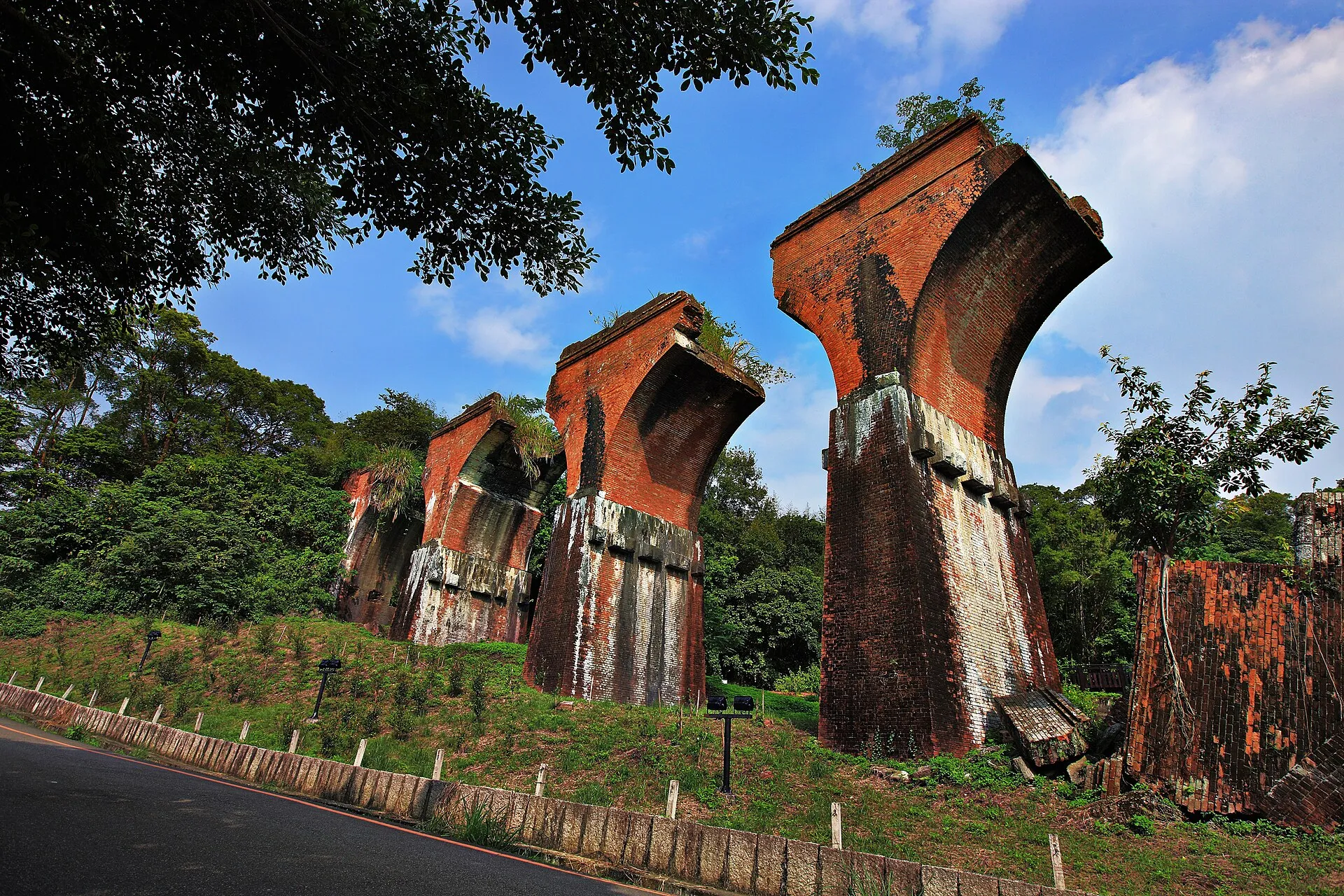
Look at the direction of bricks in the arch rings, the thickness of each pier and the rhythm of successive openings. Breaks in the structure show damage, but photographs alone cannot reconstruct precisely how forces acted during the earthquake.
Photographing the bridge as a structure
Pair a wide view with close-up photographs from the same safe viewpoint to compare the bridge’s overall proportions with its masonry detail. Never collect bricks or touch vulnerable parts of the protected structure.
Explore the location from different angles
Plan your visit with Google Maps
Remains of Longteng Bridge (龍騰斷橋/魚藤坪斷橋)
Miaoli County Road 49, 367 Sanyi Township, Miaoli County, Taiwan
For official tourism information see Taiwan Tourism Administration (official tourism portal) . Map pins, reviews and business information change over time; follow road signs and on-site guidance for parking and walking routes.
Read next
- Seasons and climate Longteng Bridge Through the Seasons: Weather, Stream Conditions and Wildlife An overview of twelve months of typical temperatures, rain, humidity, creek conditions, wildlife and what to wear along the Old Mountain Line.
- Visitor services Longteng Bridge Visitor Facilities: Toilets, Parking, Food and Supplies Plan for toilets, parking, food, stays, convenience stores, fuel, EV charging, medical help, mobile reception and accessible family facilities along the Old Mountain Line.
- Science and responsibility Why Did Longteng Bridge Break? Earthquake Engineering and Visitor Responsibility Understand how brick arches failed in the 1935 earthquake and why protecting the remains and their wildlife habitats matters.