The Remains of
Longteng Bridge
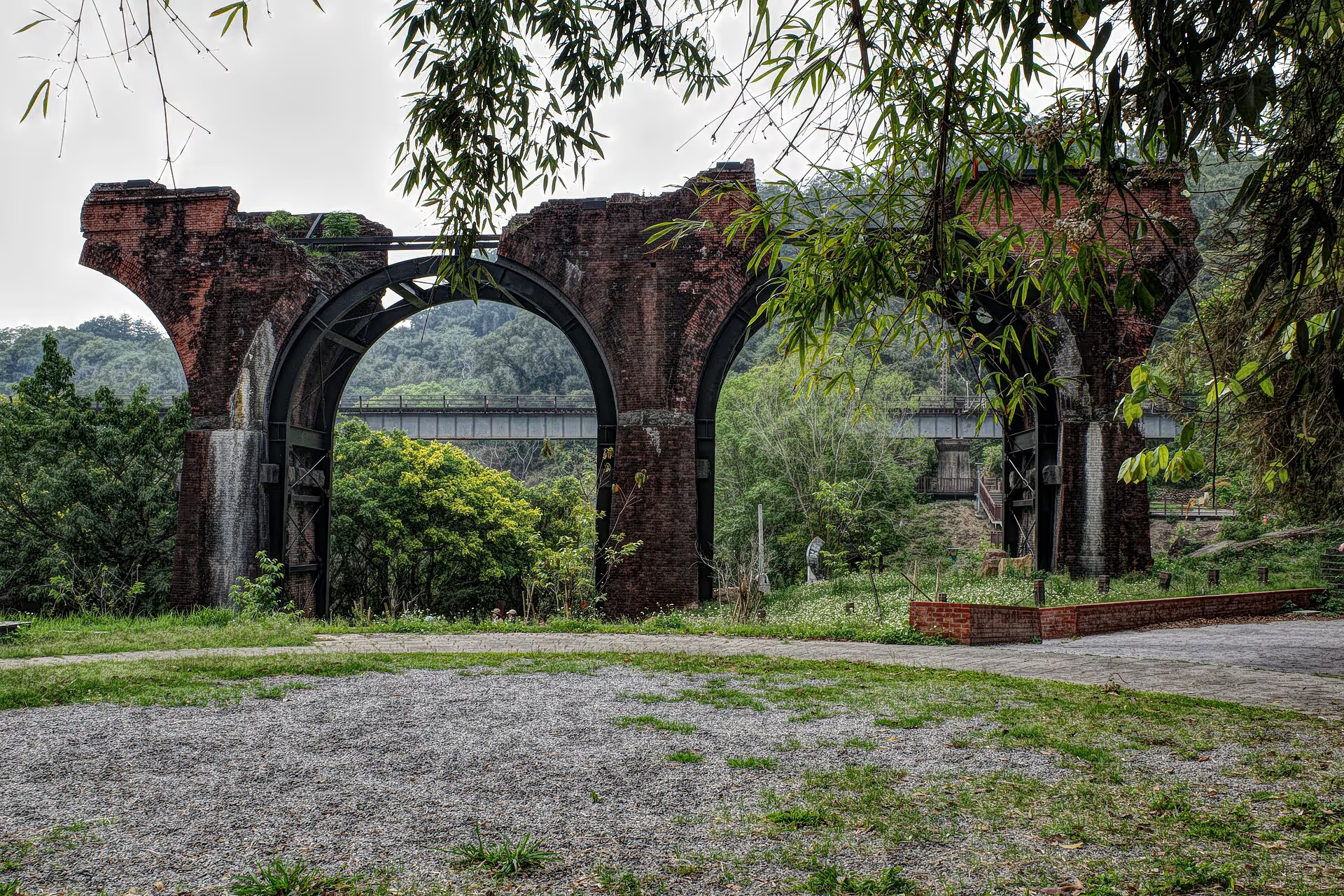
Most visitors arrive with the wrong mental picture. This is not a bridge you walk across — it is what is left of one: red-brick piers and broken arches standing in a narrow valley in Sanyi, severed by an earthquake in 1935 and left that way ever since.
Official name
Yutengping Broken Bridge
Completed
1907
Severed
1935 earthquake
Status
Miaoli County monument
What you are actually looking at
The valley holds three periods of the same railway at once, which is what makes the site worth more than a photograph.
- 01
1907–1935
The brick bridge
The Old Mountain Line climbed through the Miaoli hills with bridges and tunnels packed tightly together. Yutengping Bridge crossed this valley on red-brick piers and arches — a practical answer when brick could be made and laid on site without heavy machinery.
- 02
1935–1998
Broken, then bypassed
The 1935 earthquake cut the bridge. Rather than rebuild the brick structure, engineers built a steel girder bridge on a new alignment to the west and kept the railway running across the valley until the line itself closed in 1998.
- 03
1998–today
Heritage site
When the Sanyi–Houli section moved to a new route, the Old Mountain Line stopped carrying trains. The remains were listed as a county monument in 2003, and parts of the old line reopened later as a rail bike route.
Four things to look for on site
-
The direction of the break
The arches were not crushed — they were pulled apart at the joints when the piers shifted. Look at where the brickwork stops and you are reading the mechanics of the 1935 earthquake.
-
Two construction periods in one pier
Original brickwork sits next to later consolidation work. The monument has been stabilised more than once, most visibly after the 1999 Chi-Chi earthquake.
-
The steel bridge behind
The girder bridge further back is the Yutengping Iron Bridge, completed in 1938. It replaced the brick bridge for rail traffic on a new alignment to the west.
-
The valley below
The bridge once crossed the Yutengping creek in the catchment of Liyutan Reservoir. The water level reacts to rain upstream within minutes, not to the rain you feel.
Three bridges, not one
Almost every confusion about this place comes from two similar names in one valley. Here is the difference in one table.
| Name | Date | Structure | Today |
|---|---|---|---|
| Yutengping Broken Bridge 魚藤坪斷橋・Longteng Bridge・龍騰斷橋 | 1907, severed in 1935 | Red-brick arches and piers | Miaoli County monument, outdoor and free to visit |
| Yutengping Iron Bridge 魚藤坪鐵橋 | Completed 1938 | Steel girders on concrete piers | Post-earthquake replacement, now part of the rail bike route |
| Shengxing Station 勝興車站 | Old Mountain Line era | Timber station building at about 402 m | Highest station on the old line, old street, rail bike stop |
The short version: the broken bridge is the monument you came for, the iron bridge behind it is the 1938 replacement, and Shengxing Station is a stop further along the old line.
Tickets, hours and how long to stay
- The monument itself is free and outdoors. There is no ticket and no fixed admission time. It is a roadside heritage site that you can visit during daylight, and it does not close in the way a museum does.
- The rail bike is a separate, ticketed service. It needs a booking, runs to its own timetable, and has age, height and safety rules. Fares and timetables change, so this guide deliberately does not print them.
- Allow 30 to 60 minutes for the main area. That covers the viewing area, the arches and the steel bridge in one view. Add a half day if you combine it with Shengxing Station and the rail bike.
- Weather changes the plan, not the opening. Rain does not close the site, but the brick steps and paths become slippery and fog can reduce visibility on the mountain roads.
Opening the official sources
Fares, schedules, booking rules and park opening status are published by the bodies below. Check them directly before you travel — that is the whole point of linking out instead of copying numbers here.
- National Cultural Heritage Database: Yutengping Broken Bridge
- Miaoli County Tourism: Longteng Bridge and the south section
- Taiwan Tourism Administration: Remains of Longteng Bridge
- Old Mountain Line Rail Bike: routes, fares and timetable
Most official pages are published in Traditional Chinese. Google Translate handles them well enough for ticket and timetable details.
Best time to visit
This is a low mountain valley at roughly 300 to 400 metres, about an hour inland from the coast. It is wetter and cooler than the cities on either side, and the weather turns faster than the forecast suggests.
-
October – November
The dry, clear window. Best light, most comfortable temperatures and the most reliable visibility of the year.
-
December – February
Damp and misty with low winter sun raking across the brickwork. Cold and wet under the northeast monsoon, but photogenic.
-
March – May
Fog, tung blossom and the start of the afternoon showers. Beautiful, but bring a rain layer and grippy shoes.
-
June – September
The wettest and hottest stretch: plum rain, typhoons and near-daily afternoon thunderstorms. Go early in the day if you go at all.
Reading the weather on the day
Use the forecast for the day you travel rather than a seasonal average. Morning fog settles in this valley and lifts slowly, so an early start often means mist rather than clear brickwork. Summer afternoons bring thunderstorms more often than not. What actually changes a rail bike departure is a heavy-rain, strong-wind or typhoon warning, and that call belongs to the operator rather than to a forecast.
Riding the old line
Parts of the disused mountain line were reopened as a rail bike route, which puts you on the original trackbed through tunnels and across the Yutengping Iron Bridge. It is the only way to see the south section remains and the valley from track level.
Route A
Yutengping Iron Bridge, a distant view of the north section, and the south section remains
Choose it if
You want to understand how the two surviving ends relate to the valley
Boarding
Shengxing Station area
Route B
Longteng Station, No. 2 tunnel, Shengxing Station and the old street
Choose it if
The old street and the station matter more to you than the bridges
Boarding
Longteng Station
Route C
The Yutengping Iron Bridge and the tunnel group
Choose it if
You are here for engineering, tunnels and valley scenery
Boarding
Longteng Station
Before you book
- Boarding points are not interchangeable. Longteng Bridge, Longteng Station and Shengxing Station are three different places, and picking the wrong one on a mountain road costs time.
- Child age and height rules, pregnancy and mobility restrictions are set by the operator and can change — read the current booking terms rather than an old blog screenshot.
- Routes are occasionally adjusted for maintenance, and severe weather can suspend service. Check the operator's notice for the day of travel.
Plan the whole day, not just the stop
The bridge, Shengxing Station and the rail bike belong to one story, and whether you have a booked departure decides the rhythm of the day. Three ready-to-use plans — with and without the rail bike, and one for photography — are laid out step by step.
Steps, strollers and children
The area immediately around the main viewpoint is reasonably level and works for a short stop. Everything beyond it — the brick steps down toward the creek, the old line footpaths and the tunnels — involves stairs, loose surfaces and slopes.
- Wheelchairs and strollers can cover the parking area and the nearest viewpoint, not the full site.
- Wet brick and stone steps are genuinely slippery. Grip matters more than waterproofing.
- Do not let children climb the piers or arches: the masonry is fragile and the drops are real.
- There is very little shade and few facilities on site. Carry water and use the toilets in town or at the stations.
Driving and public transport
The bridge sits on a narrow mountain road in Sanyi Township. Driving gives you the most flexibility; by train you reach Sanyi Station first and continue uphill by taxi or local bus.
- By car National Freeway 1 to the Sanyi Interchange, then County Road 49 into the hills. The road winds, and passing space is limited in places.
- By train Taiwan Railways to Sanyi Station, then taxi, pre-booked transfer or local bus. Mountain services are sparse, so fix your return leg before you go up.
Remains of Longteng Bridge (龍騰斷橋/魚藤坪斷橋)
Miaoli County Road 49, 367 Sanyi Township, Miaoli County, Taiwan
Plus Code: 9Q5F+CJ Sanyi Township, Miaoli County, Taiwan
For official tourism information see Taiwan Tourism Administration (official tourism portal) . Map pins, reviews and business information change over time; follow road signs and on-site guidance for parking and walking routes.
Common questions
Is Longteng Bridge the same as Yutengping Broken Bridge?
Yes. Yutengping Broken Bridge (魚藤坪斷橋) is the official heritage name; Longteng Bridge is the name most travellers use, and the railway called it Yutengping Bridge when it opened in 1907. The steel bridge behind it, Yutengping Iron Bridge, is a different structure built in 1938.
Why did the bridge break?
It was severed by the 1935 earthquake centred around Sanyi and Kandaoshan, one of the most destructive earthquakes in modern Taiwanese history. Brick arches carry load by compression, so when the piers were displaced the arches were torn open at the joints. The 1999 Chi-Chi earthquake caused further damage to what remained.
Can I walk across the bridge?
No. The monument is fenced and protected, and the brickwork is unstable. You visit from the designated viewing areas beside the road and from the rail bike route. Climbing the piers or the arches is both a safety risk and a heritage protection issue.
Do I need to book or buy a ticket?
The outdoor monument has no ticket and no fixed admission time — it can be visited during daylight. The Old Mountain Line rail bike is a separate, ticketed service that requires booking, and fares, schedules and booking rules change over time, so this site links to the operator instead of publishing numbers that go stale.
Is it still worth visiting without the rail bike?
Yes. The main viewing area gives you the red-brick arches, the break itself and the steel replacement bridge in one view, and that is the core of the site. The rail bike adds tunnels, the iron bridge and the south section — it is an extra layer, not a requirement.
How do I get there without a car?
Take the Taiwan Railways Administration to Sanyi Station, then continue by taxi, pre-arranged transfer or local bus. Mountain services are infrequent and change, so plan the return leg as well as the outbound one. Driving is the most flexible option if you want to combine the monument, Shengxing Station and the old street.
Historical details, the heritage name and the geographic relationship of the three structures follow the National Cultural Heritage Database, the Miaoli tourism authority and the Taiwan Tourism Administration. Fares, timetables, opening status and road conditions are volatile, so they are not published as fixed numbers here — this guide explains how to decide and links to whoever actually operates the service.
This is not an official website. It is an independent guide, and it is maintained as separate English and Traditional Chinese versions rather than as one bilingual page — use the language switch at the top of any page to move between them.